
Online Polynomial Division Calculator: Divide Polynomials with Clear Steps
Get step-by-step polynomial division and view quotient & remainder computation.


What Is Polynomial Division?
Polynomial division is the process of dividing one polynomial by another to find a quotient and, sometimes, a remainder. It works like number long division, but uses variables, coefficients, and exponents. The expression being divided is the dividend. The expression you divide by is the divisor. The result is the quotient, and any leftover expression is the remainder.
Polynomial division follows this relationship: Dividend = (Divisor x Quotient) + Remainder The remainder must have a lower degree than the divisor.


What Are the Main Methods for Polynomial Division?
The two main methods are polynomial long division and synthetic division. Polynomial long division works with any polynomial divisor. It is the most flexible method and is useful when the divisor has two or more terms.
Synthetic division is a shorter method used when the divisor is linear and can be written as x - c. It is often faster, but it does not apply to every division problem.

How to Divide Polynomials Using Long Division?
Arrange both polynomials in descending exponent order. Add zero-coefficient placeholders for missing powers to keep columns aligned. Repeat the cycle until the remainder’s degree is less than the divisor: 1. Divide the leading term of the current dividend by the leading term of the divisor. 2. Write the result in the quotient. 3. Multiply the entire divisor by that quotient term. 4. Subtract the result and bring down the next term. 5. Repeat the process.

What Does the Remainder Mean in Polynomial Division?
A remainder is not a mistake. It is the expression left after no further division is possible. If the quotient is Q(x) and the remainder is R(x), write the final result as: Q(x) + R(x) / D(x)
where D(x) is the divisor. A remainder of 0 means the divisor divides the polynomial evenly. This can help identify factors, simplify rational expressions, and check whether a value is a root of a polynomial.
Common Mistakes When Dividing Polynomials
Polynomial division errors usually come from setup or subtraction rather than the main idea.

Skipping missing powers
Use zero placeholders so terms line up correctly.
Dividing more than the leading terms
At each round, divide only the first term of the current dividend by the first term of the divisor.
Forgetting to distribute a negative sign
When subtracting a polynomial, change every sign in the expression being subtracted.
Stopping too early
Continue until the remainder has a lower degree than the divisor.
Leaving out the remainder
Include R(x) / D(x) when the remainder is not zero.

How Does This Polynomial Division Calculator Work?
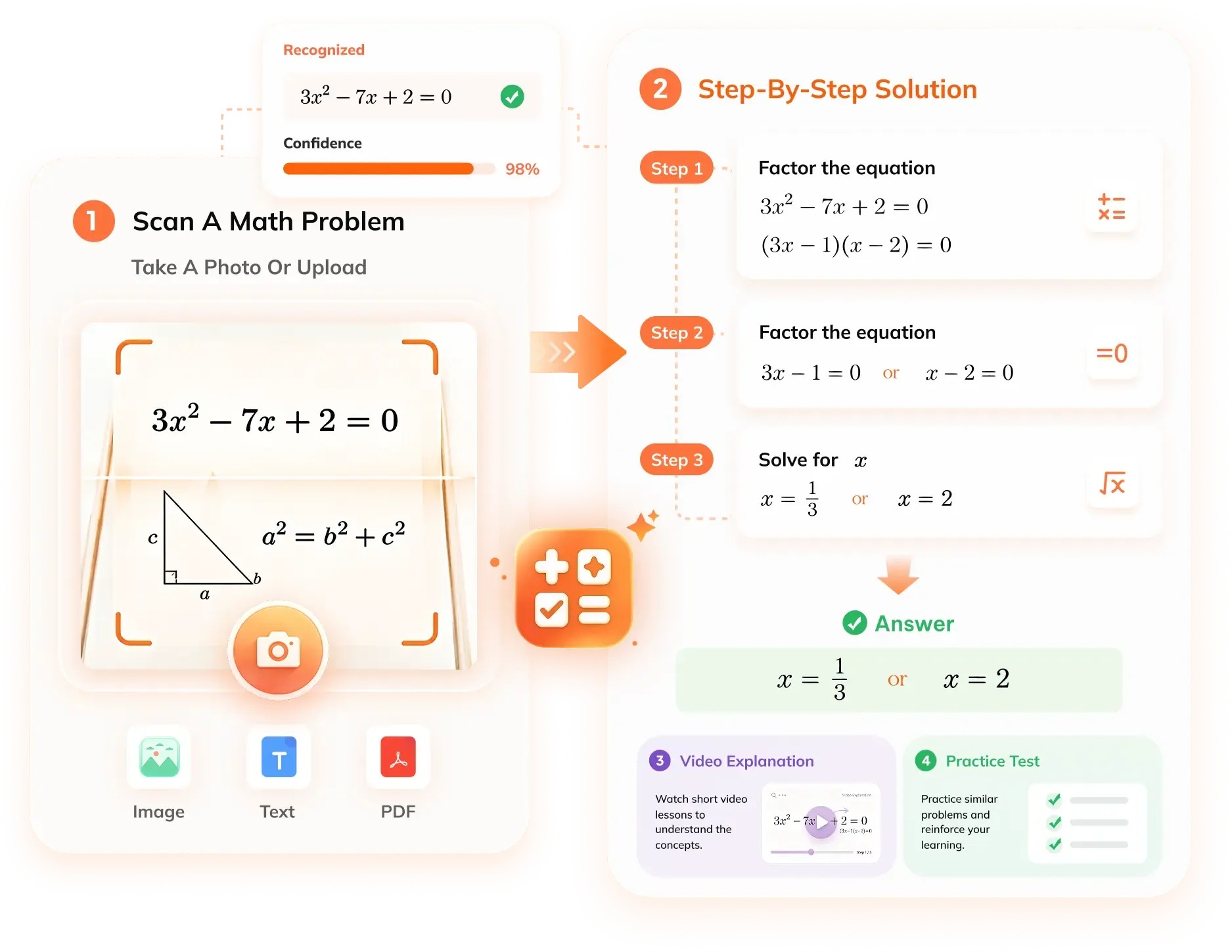
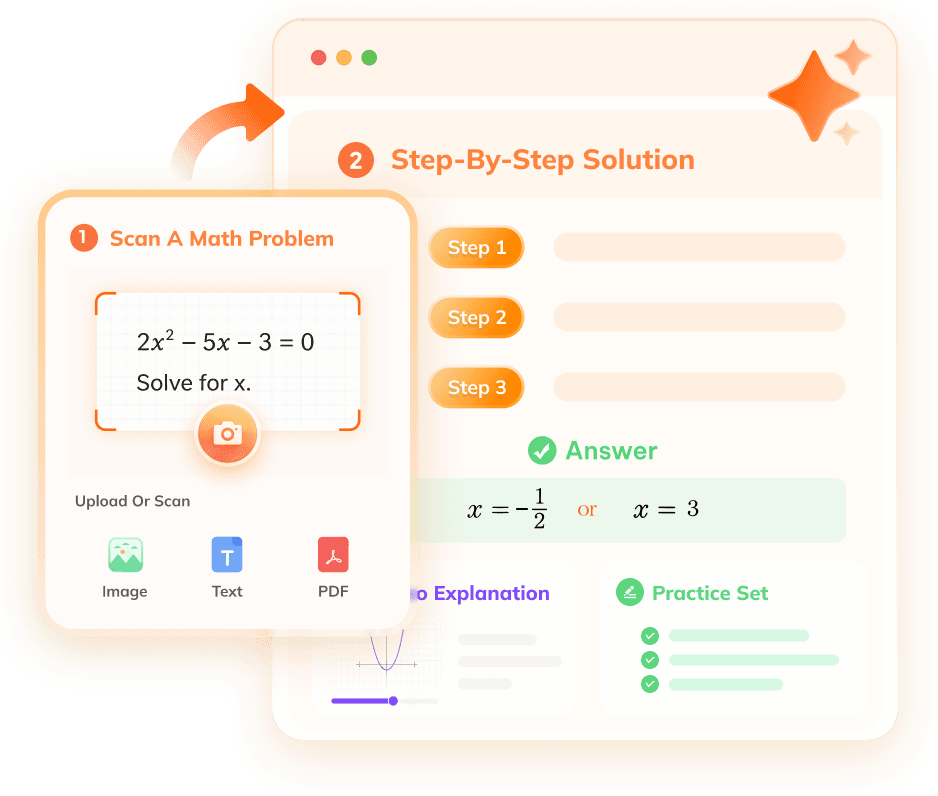
Tenorshare AI Math lets you type a polynomial division problem or upload a JPG, PNG, WEBP image, or PDF. It provides the quotient, remainder, and step-by-step process used to divide the expressions. You can also use video explanations and similar practice problems to review polynomial long division, synthetic division, and related algebra skills.
What Makes This Polynomial Division Calculator Stand Out?
Solve from your existing format
Type expressions or upload photos/PDFs, no manual retyping of terms and exponents.
Follow the full division structure
See leading term division, multiplication and subtraction step by step.
Catch setup errors early
Check your work for missing zero placeholders, sign mistakes or wrong remainders.
Practice long division confidently
Use videos and sample problems to master the method, not just get answers.
How to Use the Polynomial Division Calculator?
Step 1
Upload or enter your division problem
Type the dividend and divisor, or upload an image, or PDF containing the expression.
Step 2
Get a step-by-step explanation
Review how the quotient terms, subtraction lines, and remainder are formed.
Step 3
Use additional learning tools
Watch a video explanation and practice similar polynomial division problems.

Is this Polynomial Division Calculator Good?
A division of polynomials calculator with steps can help you compare your setup with a complete process instead of checking only the final quotient.
Try the problem by hand first, then use the explanation to find where a term was skipped, a sign was changed, or a remainder was written incorrectly. This makes the calculator useful for algebra homework, revision, and test preparation.
Discover Free Tools to Take Your Math Learning Further
Do You Have Questions?
We have answers & AI tool resources for you.
What Is Polynomial Division Used For?
Polynomial division is used to simplify rational expressions, factor polynomials, test possible roots, and solve algebra or calculus problems. It also helps describe how one polynomial expression relates to another.
Is Polynomial Division Hard?
Polynomial division can feel difficult at first because it requires careful alignment, multiplication, and subtraction. Once you follow the same divide, multiply, subtract, and bring-down pattern each time, the process becomes more manageable.
Can You Do Polynomial Long Division on a Calculator?
Yes. An online polynomial division calculator can help you divide polynomials and review the quotient and remainder. With Tenorshare AI Math, enter the expression or upload the problem to see the long division steps clearly.
How Do You Use a Polynomial Synthetic Division Calculator?
Synthetic division works when the divisor is linear and can be written as x - c. Enter the polynomial coefficients in descending order, include zeros for missing powers, and use c from the divisor to complete the synthetic division table.
What Should You Check Before Starting Polynomial Long Division?
For polynomial long division, order polynomials by descending exponents and insert 0 placeholders for missing powers. Locate leading terms of dividend and divisor to get your first quotient term. Use a polynomial long division polynomials calculator to check setup with missing terms, negative coefficients or varied x powers.
When Can You Use Synthetic Division With Polynomials?
You can use synthetic division of polynomials when the divisor is linear and can be written as x - c. To do synthetic division with polynomials, list the coefficients in descending order and include 0 for any missing powers.
Divide Polynomials and Understand Every Step
Find quotients, handle remainders, and build algebra confidence with Tenorshare AI Math.
