
Why Is AI Bad at Math? Understand AI Math Mistakes & Pick a Trustworthy AI Math Tool
Many people are surprised when AI makes mistakes on math problems. A chatbot that can write essays, summarize research, and generate code may still give incorrect answers to simple calculations, algebra problems, or multi-step equations.
This often leads to a common question: Why is AI bad at math ?
In this guide, we'll explore why AI struggles with math, whether AI is really bad at solving mathematical problems, what makes a reliable AI math solver , and how specialized tools can help provide more accurate solutions.
Catalogs:
Why Does AI Struggle With Math? 4 Reasons Explained
AI Is Not a Calculator
One of the biggest reasons AI struggles with math is that most AI chatbots are not traditional calculation engines.
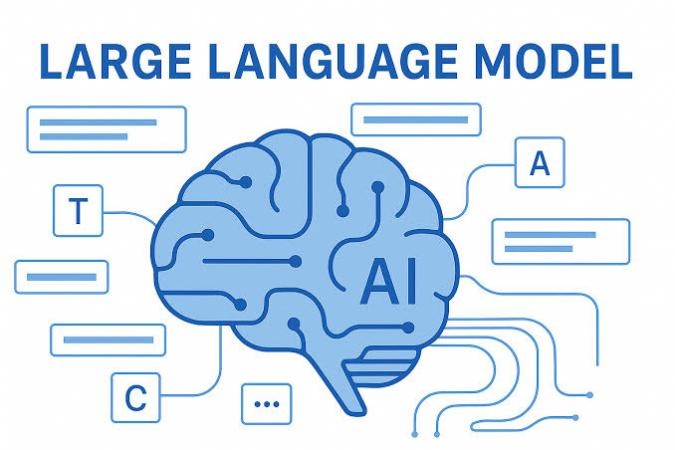
Large language models (LLMs) generate responses by predicting patterns in language based on their training data. They are designed to understand context and produce helpful answers, but they do not calculate numbers in the same way a calculator or mathematical software does.
For example, when solving a long equation, an AI chatbot may generate a solution that looks reasonable but contains a small calculation mistake. Because the response is based on learned patterns rather than guaranteed mathematical operations, the final answer can be incorrect.
This is why AI may perform well when explaining a math concept but still fail at tasks that require exact numerical accuracy.
AI Doesn't Truly Understand Math
Although AI can explain formulas and provide step-by-step solutions, it does not understand mathematics in the same way humans do.
Human mathematicians use concepts, rules, and logical relationships to solve problems. AI models, on the other hand, recognize patterns from large amounts of data and generate likely responses .
This difference becomes important when a problem requires deeper mathematical understanding. AI may know common formulas and solution methods, but it can sometimes apply the wrong rule, miss an important condition, or create an incorrect explanation that sounds convincing.
AI Can Break Down in Complex Problems
Simple math problems are usually easier for AI to handle. However, accuracy often decreases as problems become longer and require more reasoning steps.
Complex problems such as advanced algebra, calculus, or geometry proofs often involve multiple connected steps. A small mistake early in the process can affect everything that follows.
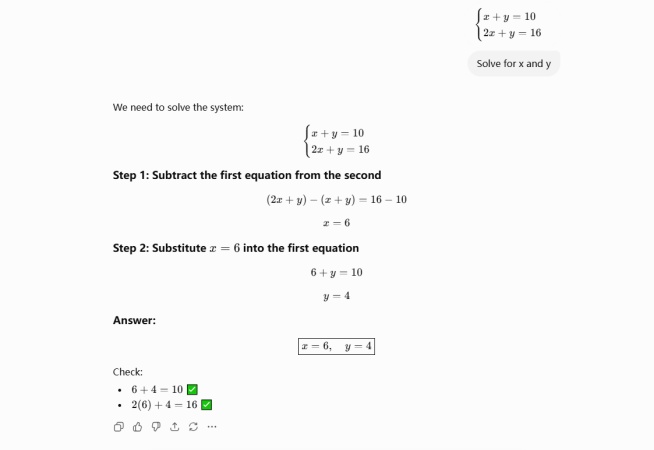
For example, an AI may correctly identify the method for solving an equation but make an error during simplification. Since later steps depend on the earlier result, the final answer becomes incorrect.
This limitation is one reason why AI-generated math answers should be checked carefully, especially for complex problems.
AI Can Misread Math Questions
Another common source of mistakes is incorrect input recognition.
When users upload images of handwritten equations, diagrams, or textbook problems, AI must first understand the visual information before solving it. If the system misreads a symbol, number, or formula, the entire solution may be based on incorrect information.
For example, confusing a minus sign with a plus sign or misunderstanding a handwritten variable can completely change the problem.
Better mathematical OCR and image recognition can reduce these errors, but accurate input understanding remains an important challenge for AI math tools.
Is AI Really Bad at Math? Not Always
Saying that "AI is bad at math" is not completely accurate. The real issue is that different AI systems are designed for different purposes.A general AI chatbot and a specialized AI math solver may both use artificial intelligence, but their approaches to solving math problems can be very different.
General AI Chatbots vs. Specialized AI Math Solvers
General AI chatbots, such as ChatGPT and other large language models, are designed for broad tasks including writing, conversation, research assistance, and coding.
They can be useful for:
-
Explaining mathematical concepts
-
Providing learning examples
-
Helping users understand solution methods
-
Creating practice questions
However, they are not always optimized for exact mathematical computation.
Specialized AI math solvers focus specifically on mathematics. They may combine AI models with mathematical engines, OCR technology, and verification methods to improve accuracy when solving equations and providing step-by-step solutions.
What Math Tasks Can AI Handle Well?
AI can be helpful for many learning-related math tasks, including:
-
Explaining difficult concepts in simpler language
-
Showing different approaches to solve a problem
-
Creating practice exercises
-
Reviewing solution steps
-
Providing study assistance
AI can also help students understand why a method works instead of simply providing an answer.
However, tasks that require guaranteed accuracy, complex calculations, or formal mathematical proof may require additional verification.
Why AI Accuracy Depends on the Tool You Use
The quality of AI math answers depends heavily on the system behind the tool.
A general-purpose chatbot may rely mainly on language generation, while a dedicated math tool may include additional technologies designed for mathematical accuracy.
When choosing an AI math tool, users should consider whether it can:
-
Recognize math problems accurately
-
Show verifiable solution steps
-
Handle different types of mathematics
-
Reduce calculation errors
-
Explain answers clearly
The tool's design often matters as much as the AI model itself.
What Makes a Reliable AI Math Solver?
A reliable AI math solver should do more than generate a possible answer. It should help users understand and verify the solution process.
Important features include:
Accurate Math Recognition
The tool should correctly identify equations, symbols, and diagrams, especially when users upload images or handwritten problems.
Step-by-Step Solutions
A good AI math solver should explain each step instead of only providing the final answer. This allows users to check the reasoning process and identify possible mistakes.
Support for Different Math Topics
A useful math AI tool should support a wide range of topics, including:
-
Arithmetic
-
Algebra
-
Geometry
-
Calculus
-
Statistics
Reliable Calculation Methods
Combining AI with mathematical computation methods can reduce the risk of incorrect answers caused by language prediction alone.
Solve Math Problems More Accurately With Tenorshare AI Math
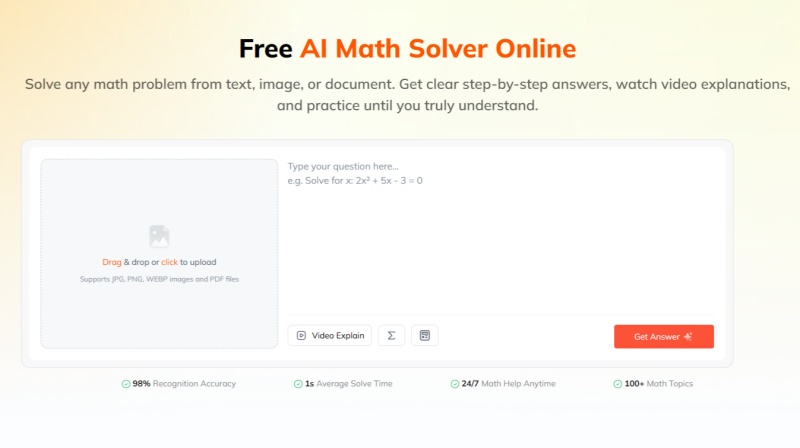
For users who want a more reliable AI-powered math experience, specialized math tools can provide advantages over general chatbots.
Unlike general AI tools that are mainly designed for conversation and content generation, Tenorshare AI Math is built specifically for mathematical problem solving. Powered by advanced AI models and optimized math-solving prompts, it is designed to better understand mathematical questions, follow problem-solving logic, and provide clearer step-by-step solutions.
With support for image recognition and PDF problem input , Tenorshare AI Math can analyze different types of math questions and help users solve problems more accurately.
Key Features
-
Multiple Input Options: Supports text, images, and PDF files for flexible problem solving.
-
Step-by-Step Solution Explanations: Shows clear solving steps instead of only final answers.
-
AI-Generated Video Explanations: Provides visual explanations for difficult math concepts.
-
Practice Question Generation: Creates similar exercises to reinforce learning.
-
Built-In Math Calculator: Handles basic calculations and mathematical expressions.
Compared with general AI chatbots, Tenorshare AI Math combines AI reasoning with math-specific optimization, input recognition, and learning features to reduce common issues such as incorrect calculations , unclear solution steps , and misunderstanding of math questions .
Final Verdict: Is AI Bad at Math?
AI is not simply "bad at math." The reason why AI is bad at math in many cases is that popular AI chatbots are not built primarily for mathematical calculation and reasoning.
These tools are powerful for explaining concepts, providing learning support, and assisting with problem-solving. However, they may still struggle with exact calculations, complex reasoning, and interpreting mathematical inputs, which can lead to incorrect or unreliable answers.
For users who need more accurate math solutions, a specialized AI math solver can be a better choice. Unlike general-purpose AI chatbots, dedicated math AI tools are designed around mathematical tasks, helping users solve problems with clearer steps, better understanding, and more structured explanations.
The key difference is not whether AI can do math, but whether you are using the right AI tool for the specific task.
Tenorshare AI Math
- Solve math from text, images & PDFs at 98% accuracy
- Deliver step-by-step answers with detailed logic breakdown
- Access video explanations for deeper math concept understanding
- Generate matching practice tests to solidify knowledge

FAQs
-
Will AI replace human math skills?
AI is unlikely to completely replace human mathematical skills. Instead, it is more likely to become a learning assistant that helps students understand concepts, explore solutions, and practice problem-solving. Human skills such as critical thinking, logical reasoning, and understanding mathematical concepts remain important.
-
Can AI solve advanced mathematics problems?
AI can solve many advanced math problems, but reliability varies depending on the tool and the complexity of the task. Some AI systems can assist with calculus, algebra, and mathematical reasoning, but users should still verify answers for advanced problems that require strict accuracy.
-
Why do AI models give incorrect answers confidently?
AI models can produce incorrect answers confidently because they are designed to generate helpful-looking responses, not to guarantee that every statement is mathematically correct.
-
What is the difference between ChatGPT and an AI math solver?
ChatGPT is a general AI assistant designed for many tasks, including writing, conversation, and explanations. An AI math solver is specifically optimized for mathematical problems and may include features such as math OCR, calculation tools, and structured solution steps.
-
Why does ChatGPT make mistakes on simple math problems?
ChatGPT can make mistakes on simple math problems because it generates responses based on learned patterns rather than directly performing every calculation with a dedicated math engine.
You Might Also Like
- What Happened to Microsoft Math Solver? Why It Was Discontinued and What to Use Instead
- AI Advances in Math: A Guide to the 2026 Latest Breakthroughs
- How to Improve Math Skills: 5 Practical Ways to Get Better at Math 2026
- How to Solve Linear Equations in 5 Easy Steps [2026 Guide]
- How to Study for a Math Test: From 7 Days Before to the Night Before
- How to Get Better at Math Fast: 8 Strategies to Improve Your Skills

Tenorshare AI Math: Solve any math problems with AI
Turn math questions into clear solutions, tutorial videos & targeted practice setsTenorshare AI Math: Instant Solutions
Steps, videos & practice for every problem
Tenorshare AI Math: Solve any math problems with AI