
Why Is Statistics So Hard to Understand? 5 Real Reasons
Statistics is a subject that many students find challenging, even those who are comfortable with basic math skills. Unlike traditional math problems that often follow clear steps, statistics involves working with data, uncertainty, and complex ideas that may not always have an obvious solution.
So, why is statistics so hard to understand ? Many students struggle when they move beyond calculations and begin dealing with concepts like probability, statistical methods, and interpreting results.
In this guide, we will explore the main reasons students find statistics difficult, including logical thinking, probability, formulas, and data interpretation. We will also look at how different statistics courses compare and share practical ways to make learning statistics easier.
Catalogs:
Is Statistics Hard to Learn?

Statistics can be challenging, but the difficulty depends on the course level, learning background, and the type of problems students need to solve. For beginners, statistics may feel unfamiliar because it focuses less on finding a single answer and more on analyzing patterns, uncertainty, and evidence.
Unlike many traditional math problems, statistics questions often require students to decide:
-
What information is important?
-
Which statistical method should be used?
-
How should the result be interpreted?
This is why some students search for "is math statistics hard" or "how hard is statistics" when they start a statistics course. The answer is usually not that statistics is impossible, but that it requires a different approach compared with other math subjects.
Why Do Students Find Statistics Difficult?
Many students find statistics difficult because it combines several skills at the same time. They need to understand mathematical concepts, apply formulas correctly, and explain the meaning of results.
For example, calculating an average is relatively straightforward. However, understanding whether a sample represents a larger population or whether a result is statistically meaningful requires deeper reasoning.
Statistics can feel difficult when students focus only on memorizing steps instead of understanding the ideas behind those steps.
Why Is Statistics So Hard to Understand?
The main reason statistics feels difficult is that it involves concepts that are less concrete than traditional calculations. Students often need to work with uncertainty, probability, and data patterns rather than exact values.
Statistics Requires Logical Thinking

Statistics requires more than performing calculations. Students need to think logically about data and decide how to approach a problem.
For example, a statistics problem may not simply ask students to solve an equation. Instead, it may require them to determine:
-
Which statistical test is appropriate?
-
What assumptions should be considered?
-
What does the final result suggest?
This type of reasoning can be unfamiliar for students who are used to following fixed procedures in math classes.
Probability Can Feel Counterintuitive
Probability is one reason why probability and statistics can be difficult to understand. Many probability concepts do not always match everyday intuition.
Students may struggle with ideas such as:
-
Conditional probability
-
Independent events
-
Random variables
-
Probability distributions
The challenge is that probability involves uncertainty. Unlike algebra problems with predictable steps, probability often requires students to think about possible outcomes and patterns.
Formulas Need More Than Memorization
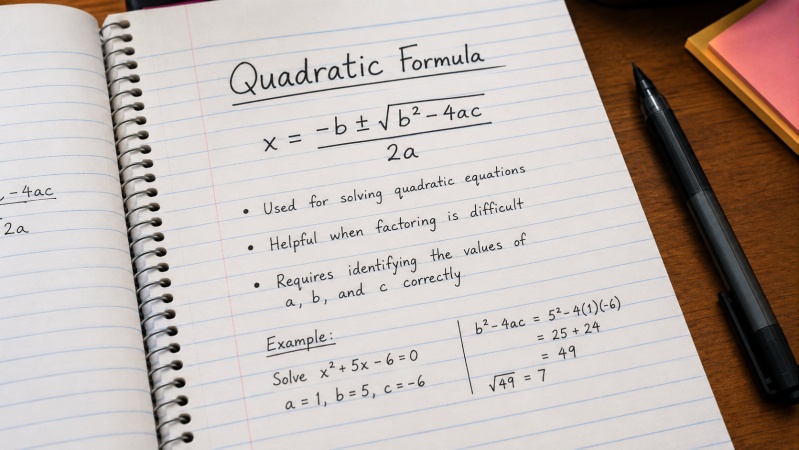
Many students assume statistics is difficult because there are many formulas. However, memorizing formulas is usually not the hardest part.
The bigger challenge is knowing:
-
When to use a specific formula
-
Why a certain method fits a problem
-
How different statistical concepts are connected
For example, knowing the formula for standard deviation does not automatically mean a student understands what standard deviation tells us about a dataset.
Data Interpretation Takes Practice
Another reason why statistics is so hard to learn is that students must interpret results, not just calculate them.
A statistical answer often needs explanation:
-
What does this value mean?
-
Is this result significant?
-
What conclusion can be drawn from the data?
This makes statistics different from many other math subjects where the final number is often the main goal.
Why Is College Statistics So Hard?

Many students ask "why is college statistics so hard" because introductory college statistics can feel different from the math courses they have taken before.
College statistics often introduces new concepts while requiring students to apply them to real-world situations.
Intro Statistics Has New Concepts
Intro statistics introduces terminology and ideas that many students have never studied before, including:
-
Sampling methods
-
Confidence intervals
-
Hypothesis testing
-
Statistical inference
For students taking their first statistics class, these concepts may feel abstract because they describe uncertainty and populations rather than simple numerical calculations.
Statistics Classes Require Real-World Applications
Statistics classes often focus on applying concepts to practical situations.
Students may need to analyze:
-
Survey results
-
Scientific research data
-
Business reports
-
Experimental outcomes
This application-based learning is one reason why statistics class can feel challenging. Students must connect mathematical methods with real-world meaning.
Are Some Types of Statistics Harder Than Others?
The difficulty of statistics depends on the course content and the skills required. Different fields of statistics may emphasize different types of problems.
Is Business Statistics Hard?
Many students wonder, "is business statistics hard?" Business statistics usually focuses on using data to support decisions in areas such as marketing, finance, and management.
Common topics include:
-
Descriptive statistics
-
Probability analysis
-
Regression
-
Forecasting
The challenge is often not advanced calculations but understanding how statistical results apply to business situations.
Is Applied Statistics Hard?
Applied statistics focuses on using statistical methods to solve problems in real-world fields.
Students may need to understand:
-
Data collection methods
-
Statistical models
-
Research results
-
Data-based decision-making
How hard applied statistics feels depends on a student's background and familiarity with the subject area where statistics is being used.
Is Statistics Harder Than Other Math Classes?
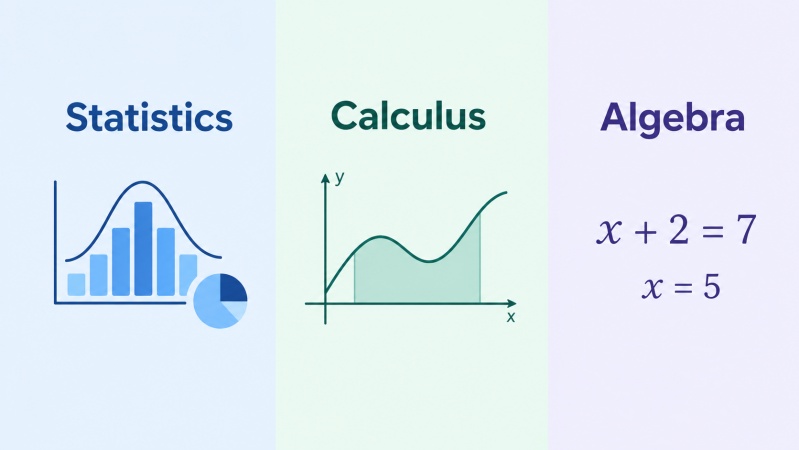
There is no universal answer to whether statistics is harder than other math classes. Different subjects challenge different skills.
Statistics vs Calculus
Statistics and calculus require different types of mathematical thinking.
Calculus often focuses on:
-
Functions
-
Change over time
-
Mathematical relationships
Statistics focuses more on:
-
Data analysis
-
Probability
-
Uncertainty
-
Drawing conclusions from evidence
Some students find calculus harder because of abstract concepts, while others find statistics harder because of interpretation and reasoning.
Statistics vs Algebra
Algebra usually involves solving equations and manipulating symbols to find unknown values.
Statistics often requires students to analyze information and choose appropriate methods before calculating an answer.
For students who prefer clear procedures, statistics may feel more difficult. For students who enjoy working with data and patterns, statistics may feel more natural.
How to Make Statistics Easier to Learn?
Although statistics can feel challenging, using the right learning strategies can make concepts easier to understand. Instead of focusing only on formulas, students can improve by building conceptual understanding, practicing different problem types, and reviewing solutions step by step.
Understand Concepts Before Formulas
Many students find statistics difficult because they memorize formulas without understanding what they represent. Before learning how to calculate a value, focus on the idea behind it and when the method should be applied.
For example, understanding what a confidence interval shows is more useful than simply remembering its formula. A strong conceptual foundation makes it easier to solve new statistics problems.
Practice Different Types of Problems
Statistics includes many types of questions, and recognizing the differences between them is an important skill. Regular practice can help students identify which method to use and understand how statistical concepts apply in different situations.
When reviewing problems, students should focus not only on whether the answer is correct but also on why a specific approach works.
Use Step-by-Step Solutions for Statistics Problems
Step-by-step explanations can help students see how a statistics problem is solved and understand the reasoning behind each calculation. This is especially useful when a mistake occurs or when a solution involves multiple steps.
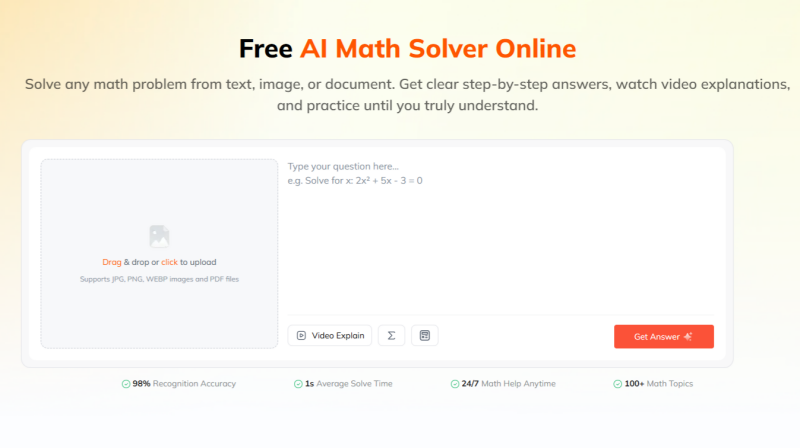
Tools like Tenorshare AI Math can support statistics learning by providing:
-
Step-by-step solutions to break down problem-solving processes
-
Text, image, and PDF input for working with different study materials
-
AI-generated video explanations for harder concepts
-
Similar practice questions to reinforce learning
By combining explanations with practice, students can develop a better understanding of statistical methods instead of relying only on memorized formulas.
Final Thoughts: Why Is Statistics So Hard to Learn?
Statistics can feel difficult because it combines mathematics, probability, logical thinking, and interpretation. The biggest challenge is often not calculating numbers but understanding what those numbers represent and how to apply statistical methods correctly.
Students who struggle with statistics can improve by focusing on concepts, practicing different types of problems, and learning how to interpret results instead of only memorizing formulas. Step-by-step explanations and targeted practice can also help make unfamiliar concepts easier to understand.
For students looking for additional support, AI math solvers like Tenorshare AI Math can provide step-by-step solutions, explanations, and practice resources to help build a clearer understanding of statistics problems. With the right learning approach and consistent practice, statistics becomes a skill that can be developed over time.

Tenorshare AI Math
- Solve math from text, images & PDFs at 98% accuracy
- Deliver step-by-step answers with detailed logic breakdown
- Access video explanations for deeper math concept understanding
- Generate matching practice tests to solidify knowledge

FAQs
-
Is Statistics Hard If You Are Bad at Math?
Being weak in some areas of math does not automatically mean statistics will be impossible. Many statistics courses focus more on reasoning, concepts, and interpretation than advanced calculations. However, a basic understanding of arithmetic, algebra, and graphs can make learning statistics easier.
-
Do You Need to Be Good at Math to Study Statistics?
You do not always need advanced math skills to study introductory statistics. Many beginner courses focus on understanding concepts and applying statistical methods rather than solving complex mathematical proofs.
-
How Long Does It Take to Learn Statistics?
The time needed to learn statistics depends on the course level, previous knowledge, and amount of practice. Basic statistics concepts can be learned relatively quickly, while advanced topics such as statistical modeling and inference require more time.
-
What Is the Hardest Part of Learning Statistics?
For many students, the hardest part of learning statistics is understanding how to choose the right method and interpret results. Calculations are often only one part of a statistics problem; explaining what the results mean is equally important.
-
Can You Learn Statistics Without Taking Advanced Math?
Yes. Many introductory statistics courses do not require advanced mathematics. Students can often learn statistics with basic algebra skills while focusing on concepts, reasoning, and practical applications.
You Might Also Like
- Why Is AI Bad at Math? Understand AI Math Mistakes & Pick a Trustworthy AI Math Tool
- What Happened to Microsoft Math Solver? Why It Was Discontinued and What to Use Instead
- How to Isolate a Variable: Definition, Step-by-Step Tutorial & Common Mistakes
- Geometric Terms List: 30+ Geometry Terms You Should Know
- Is Geometry Hard? What Makes Geometry Difficult & How to Simplify It
- Geometry Proofs: How to Think Through and Solve Any Proof

Tenorshare AI Math: Solve any math problems with AI
Turn math questions into clear solutions, tutorial videos & targeted practice setsTenorshare AI Math: Instant Solutions
Steps, videos & practice for every problem
Tenorshare AI Math: Solve any math problems with AI