
How to Get Better at Mental Math: Practical Strategies and Daily Practice
Want to calculate faster without reaching for a calculator every time? Learning how to get better at mental math starts with more than memorizing random shortcuts. The real improvement comes from building basic number fluency, recognizing useful patterns, choosing efficient strategies, and practicing them consistently.
In this guide, you'll learn practical ways to improve mental math for addition, subtraction, multiplication, division, percentages, and squaring. We'll also cover a simple daily practice routine, common mistakes to avoid, and a useful tool for checking your answers and reviewing problems when you get stuck.
Also Read: How to Do Math in Your Head: 5 Mental Math Techniques for Faster Calculations
Catalogs:
What Is Mental Math?

Mental math is the process of solving calculations in your head without relying on a calculator, paper, or written algorithm. It can include simple arithmetic, estimation, percentages, multiplication, division, and more complex calculations broken into smaller mental steps.
Being good at mental math does not mean solving every problem as quickly as possible. It also means recognizing number relationships and choosing an efficient way to reach an accurate answer.
For example, instead of calculating 48 × 25 directly, you could recognize that 25 × 4 = 100 and calculate:
48 × 25 = 48 × 100 ÷ 4 = 1,200
The strategy makes the calculation easier without requiring a special trick.
Why Mental Math Skills Matter?
Mental math is useful whenever you need to make a quick calculation without stopping to write everything down or use a calculator.
Mental Math for Everyday Decisions
You may use mental math when:
-
Estimating the total cost of several items
-
Calculating discounts or tips
-
Splitting a bill
-
Comparing prices
-
Estimating travel time or distance
-
Checking whether a calculation seems reasonable
For example, if an item costs $48 and is 25% off, you can recognize that 25% is one-quarter and quickly estimate the discount as $12.
Mental math can also help you check calculations. If a cashier, receipt, spreadsheet, or calculator gives you an unexpected result, a quick estimate can tell you whether the answer is in the right range.
Mental Math for School, Tests, and Work
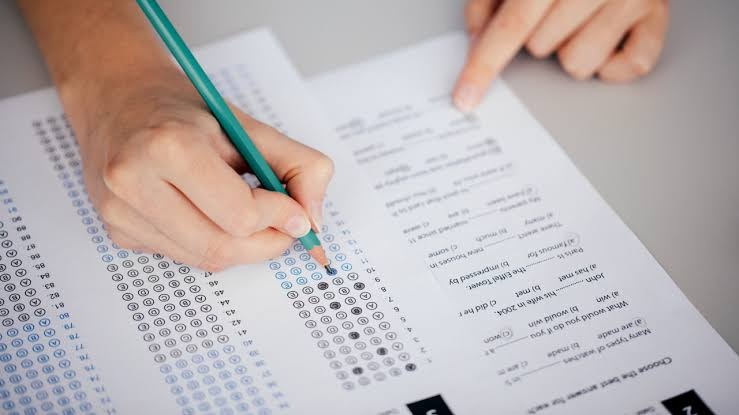
Mental calculation can also support schoolwork and tests by making basic arithmetic more automatic. When simple calculations require less effort, you can focus more attention on the larger problem.
At work, mental math is particularly useful for quick estimates involving percentages, quantities, prices, time, or ratios. It is not a replacement for precise calculations when accuracy is critical, but it can help you estimate and verify numbers efficiently.
Mental Math Strategies to Learn First
The most useful mental math strategies are based on understanding numbers rather than memorizing isolated shortcuts. Research on mental calculation has emphasized the importance of being able to select and adapt strategies according to the numbers in a problem.
Start with these strategies:
| Strategy | How it works | Example |
|---|---|---|
| Break numbers apart | Split a number into easier parts | 47 + 36 → 47 + 30 + 6 |
| Round and adjust | Use a nearby easy number, then correct it | 49 + 27 → 50 + 27 − 1 |
| Work left to right | Calculate the largest place values first | 63 + 28 → 60 + 20 + 3 + 8 |
| Double and halve | Change the form of a calculation while keeping the result | 16 × 25 → 8 × 50 |
| Use number relationships | Connect the problem to a familiar fact | 25% of 80 → 1/4 of 80 |
| Estimate first | Find an approximate answer before calculating exactly | 198 + 304 ≈ 500 |
The important skill is knowing when to use each strategy. A mental math strategy becomes more useful when you can recognize the number pattern that makes it efficient.
Mental Math Strategies for Different Operations
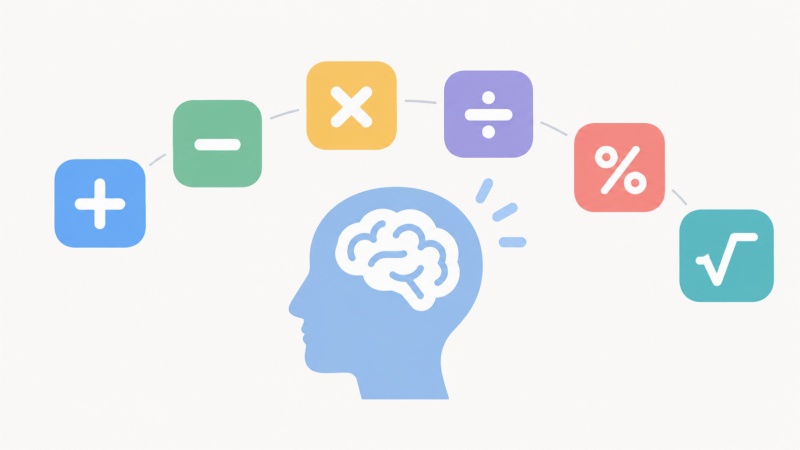
Different types of calculations benefit from different approaches. You do not need to memorize every possible mental math trick. Instead, learn a few reliable methods for each operation.
Addition and Subtraction
For addition, breaking numbers apart and rounding are often useful.
For example:
58 + 37
You can calculate:
58 + 30 + 7 = 95
Or:
60 + 37 − 2 = 95
For subtraction, compensation can make awkward numbers easier:
83 − 29
Instead of subtracting 29 directly:
83 − 30 + 1 = 54
These methods reduce the amount of calculation you have to hold in your head at once.
Multiplication
Mental math multiplication becomes easier when you break one factor into simpler parts .
For example:
23 × 6
can become:
20 × 6 + 3 × 6 = 120 + 18 = 138
You can also use doubling and halving:
16 × 25 = 8 × 50 = 4 × 100 = 400
Learning common relationships involving 5, 10, 25, 50, and 100 can make many multiplication problems easier to recognize.
Division
For mental division, look for familiar multiples and factors.
For example:
144 ÷ 12
can be solved by recognizing that:
12 × 12 = 144
For less familiar numbers, break the dividend into easier parts:
96 ÷ 8 = 80 ÷ 8 + 16 ÷ 8 = 10 + 2 = 12
The more multiplication facts you can recall automatically, the easier mental division becomes.
Percentages
Percentages are easier when you convert them into familiar fractions or smaller percentages.
For example:
-
50% = 1/2
-
25% = 1/4
-
10% = 1/10
-
5% = half of 10%
-
1% = divide by 100
To find 15% of $80:
10% of $80 = $8
5% of $80 = $4
So:
15% = $12
This approach is often easier than applying a percentage formula mentally.
Squaring Numbers
Some squaring calculations become easier when a number is close to a round number.
For example:
49²
can be calculated as:
(50 − 1)²
which gives:
2,500 − 100 + 1 = 2,401
For numbers ending in 5, another useful pattern is:
35² = 3 × 4 × 100 + 25 = 1,225
You do not need to memorize every squaring technique. Focus on recognizing patterns that repeatedly make calculations easier.
How to Practice Mental Math Every Day?
Regular practice is important, but the way you practice matters. Research has found that practice can affect both strategy selection and efficiency in simple mental arithmetic.
A simple routine can help you build the skill progressively.
Start With Accuracy
Do not begin by trying to solve everything as fast as possible.
First make sure you can consistently solve basic calculations correctly. If you make frequent errors, increasing speed may simply make those errors happen faster.
Start with calculations that are challenging enough to require thought but not so difficult that you regularly guess.
Practice One Strategy at a Time
Choose one mental math strategy and practice several examples with it.
For example, spend one session practicing compensation:
-
39 + 24
-
58 + 19
-
72 − 29
-
101 − 48
Once the method becomes familiar, mix it with other strategies. This helps you learn not only how a strategy works, but also when it is useful.
Add Speed Gradually
Once accuracy is consistent, introduce short timed exercises.
You can start by tracking how long it takes to complete a small set of problems. Later, try to reduce your time while maintaining the same accuracy.
The goal is not simply to calculate faster. Strong mental calculation also involves choosing an efficient strategy that fits the problem. Research on mental calculation flexibility similarly focuses on adapting the solution method to the characteristics of the numbers involved.
Review Your Mistakes
A wrong answer can show you what to practice next.
When you make a mistake, ask:
-
Did I forget a basic math fact?
-
Did I choose an inefficient strategy?
-
Did I make a place-value error?
-
Did I rush?
-
Did I lose track of an intermediate number?
Then practice several similar problems.
This is more useful than simply checking the answer and moving on.
Use Mental Math in Real Life
You can practice without setting aside a formal study session.
Try estimating:
-
The total cost of items in a shopping cart
-
A 10%, 15%, or 20% tip
-
A discount
-
The amount each person owes after splitting a bill
-
How much time remains before an appointment
-
A rough total when adding several prices
Real-life calculations give you opportunities to apply strategies in different contexts rather than solving the same type of worksheet repeatedly.
Common Mental Math Mistakes to Avoid
Improving mental math is not just about learning more techniques. Avoiding ineffective practice habits matters too.
-
Chasing speed too early: Accuracy should come before timed practice.
-
Memorizing random tricks: A shortcut is easier to use when you understand the number relationship behind it.
-
Using the same strategy for every problem: Different numbers can make different approaches more efficient.
-
Skipping estimation: An approximate answer gives you a quick way to check whether an exact result makes sense.
-
Ignoring mistakes: Repeating problems without understanding why you got them wrong can reinforce the same error.
A flexible approach is generally more useful than building a large collection of disconnected tricks. Research on mental calculation similarly treats flexibility as the ability to use different methods and adapt them appropriately to a problem.
Practice Mental Math With the Right Tools
The best practice tool depends on your age, skill level, and how you prefer to study. Younger students may benefit from games and structured drills, while older students often need more flexible practice and a quick way to check completed work.
For Younger Students: Games and Structured Drills

For elementary school students, mental math games and structured practice can make repetitive arithmetic easier to maintain. Khan Academy Kids is a well-known option for younger learners, with activities that build number sense and practice addition and subtraction through interactive exercises. Prodigy Math takes a more game-based approach, combining curriculum-aligned math practice with an RPG-style experience for school-age students.
For children who need more repetition, worksheet-based practice can also be useful. It provides a simple way to practice the same operations repeatedly without relying entirely on screen-based activities.
For Teens and Adults: Timed Practice and Skill Tracking
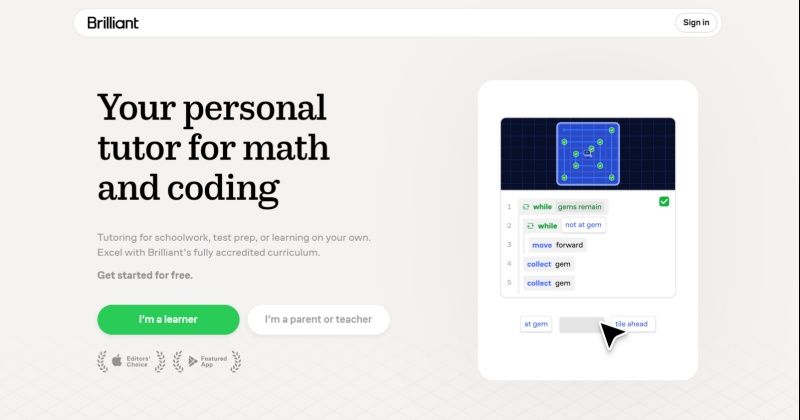
Older students may prefer tools that offer more challenging problems and allow them to practice independently. Khan Academy provides structured math lessons and practice across a wide range of levels, while Brilliant focuses on interactive problem solving and personalized practice for older learners and adults.
These tools can help build consistency and mathematical fluency. However, there is another part of practice that can take just as much time: checking your answers.
After Practice: Use Tenorshare AI Math to Check Your Answers Efficiently
After finishing a set of mental math problems, checking your answers can take almost as much time as doing the exercises---especially when the questions come from worksheets, screenshots, or PDFs.
This is where an AI math solver can help. Instead of replacing your practice, use it to follow a simple workflow: Solve it yourself → Check your answer → Find the mistake → Review the steps → Try a similar problem
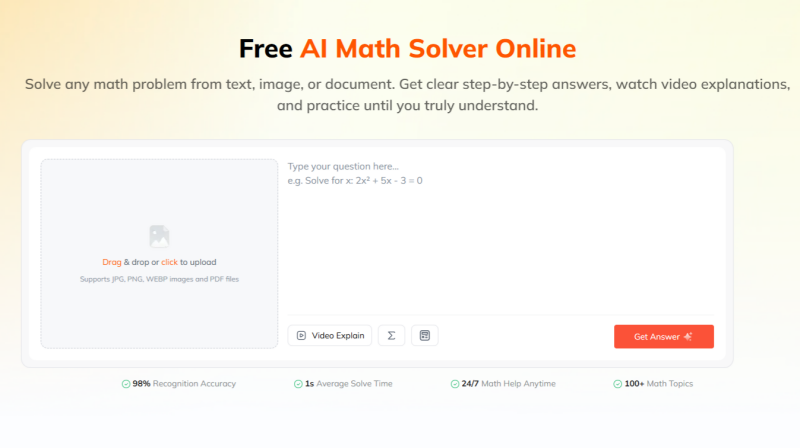
Tenorshare AI Math supports this workflow with text, image, and PDF input, so you can check completed problems without retyping every question. It also provides step-by-step solutions, video explanations, and similar practice questions for reviewing mistakes and reinforcing the same skill.
Its useful features for mental math practice include:
-
Step-by-step solutions: Shows the calculation steps so you can find mistakes.
-
Text, image, and PDF input : Check typed problems, worksheets, screenshots, or PDFs.
-
AI-generated video explanations: Provides a visual walkthrough for harder problems.
-
Similar practice questions: Generates related problems for additional practice.
-
Built-in math calculator: Handles routine calculations within multi-step problems.
For mental math, the important distinction is that the AI tool should come after your own attempt. Solve the problems mentally first, then use Tenorshare AI Math to check the result and understand mistakes. This keeps the tool focused on feedback and review rather than replacing the mental calculation practice itself.
Conclusion: How to Get Better at Doing Mental Math
Learning how to get better at mental math is mainly about building accuracy first, then improving your strategy, fluency, and speed. Start with basic number relationships, practice common operations regularly, and gradually add timed exercises and real-life calculations.
You do not need to memorize every mental math trick. Focus on strategies that make calculations easier to break down, estimate, and check.
For practice and review, Tenorshare AI Math can complement mental math training by checking answers, showing calculation steps, and generating similar practice questions. The key is to solve problems mentally first, then use the tool to verify your work and learn from mistakes.

Tenorshare AI Math
- Solve math from text, images & PDFs at 98% accuracy
- Deliver step-by-step answers with detailed logic breakdown
- Access video explanations for deeper math concept understanding
- Generate matching practice tests to solidify knowledge

FAQs
-
Are Mental Math Apps and Games Helpful?
Yes, they can be useful for repeated practice, especially when they provide adjustable difficulty, timed exercises, progress tracking, or immediate feedback. Games can also make practice easier to sustain. However, an app is most useful when it supports a clear practice goal. If you are struggling with multiplication, for example, targeted multiplication exercises are likely to be more useful than unrelated speed games.
-
Do I Need an Abacus for Mental Math?
No. An abacus is one method for developing mental calculation skills, but it is not required. Abacus-based training can teach learners to visualize quantities and perform calculations using an imagined abacus. Some current training programs combine physical or virtual abacus practice with mental arithmetic exercises. You can also develop mental math through basic fact fluency, number relationships, estimation, and flexible calculation strategies.
-
How Can I Get Better at Mental Math as an Adult?
Adults can use the same basic principles: start at an appropriate difficulty, practice consistently, and increase complexity gradually. Practical calculations are a good starting point. Try percentages, discounts, tips, estimation, multiplication, division, and everyday calculations before moving to more demanding problems. Short, regular sessions are generally easier to maintain than occasional long practice sessions.
-
What Are the Best Mental Math Tricks for Kids?
For children, the most useful mental math techniques are usually those that strengthen number relationships rather than rely on isolated shortcuts. Common examples include making 10, using doubles and near doubles, breaking numbers apart, rounding and adjusting, using familiar multiplication facts, and estimating before calculating. The right strategy should match the child's current math level. The goal is to help children understand why a method works and recognize when to use it, rather than simply memorize a trick.
-
Are Mental Math Worksheets and Printables Good for Practice?
Yes. Worksheets and printables can provide structured repetition and make it easy to focus on a specific operation or difficulty level. They are particularly useful when you want a fixed set of problems without distractions. However, worksheets do not automatically provide feedback or adapt to your weaknesses. Combining them with mistake review, timed practice, or interactive tools can make practice more varied.
You Might Also Like
- How to Improve Math Skills: 5 Practical Ways to Get Better at Math 2026
- How to Get Better at Math Fast: 8 Strategies to Improve Your Skills
- How to Study for a Math Test: From 7 Days Before to the Night Before
- How to Isolate a Variable: Definition, Step-by-Step Tutorial & Common Mistakes
- How to Solve Linear Equations in 5 Easy Steps [2026 Guide]
- How to Solve a Hard Math Problem: A Simple Guide for Students

Tenorshare AI Math: Solve any math problems with AI
Turn math questions into clear solutions, tutorial videos & targeted practice setsTenorshare AI Math: Instant Solutions
Steps, videos & practice for every problem
Tenorshare AI Math: Solve any math problems with AI