
How to Solve a Hard Math Problem: A Simple Guide for Students
Have you ever spent 20 minutes staring at a math problem and still had no idea where to start? You read the question again, try different formulas, and check your notes---but nothing seems to work.
In this guide, you'll learn how to solve a hard math problem step by step using proven problem-solving techniques and a reliable AI math solver . Whether you are preparing for exams, practicing competition math, or simply trying to improve your skills, these strategies can help you approach challenging questions with more confidence.
Also Read: 15 Hardest Digital SAT Math Questions With Answers & Strategies
Why Are Math Problems So Hard?
Before learning how to solve hard math problems, it is important to understand why some problems feel much harder than others.
A difficult math problem usually combines multiple challenges instead of testing only one skill.
The Problem Uses Unfamiliar Concepts
Some problems are difficult because they introduce concepts you have not seen before. Even if you know the formulas, you may not know when or how to apply them.
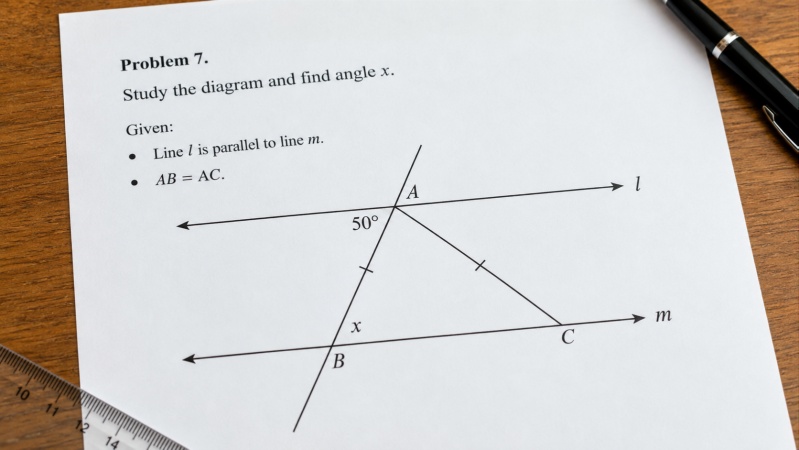
For example, a geometry problem may not directly tell you which theorem to use. The challenge is recognizing that the problem involves a specific relationship between angles, lines, or shapes.
The Solution Requires Multiple Steps
Many challenging problems cannot be solved with a single calculation.
You may need to:
-
understand the given information
-
create an equation
-
transform the equation
-
apply a formula
-
verify the final result
Missing one small step can prevent you from reaching the correct answer.
The Important Information Is Hidden
Hard math problems often contain extra information or present information in an unfamiliar way.
The key challenge is identifying:
-
What information matters?
-
What information can be ignored?
-
What exactly is the problem asking?
This is why carefully understanding the problem is often more important than calculating quickly.
The Problem Requires Creative Thinking
Easy problems usually have a familiar method. Hard problems often require you to create a path yourself.
Mathematicians often solve difficult problems by:
-
Looking for patterns
-
connecting ideas from different topics
-
simplifying the problem
-
approaching it from another direction
In other words, difficult math is less about speed and more about flexible thinking.
How to Solve Hard Math Problems: 8 Effective Tips
When you face a difficult question, do not immediately start calculating. Instead, follow a structured process.
These eight strategies can help you approach almost any challenging math problem.
Read the Problem Carefully
The first step in solving a hard math problem is making sure you fully understand what the question is asking.
Many students make mistakes because they start solving before analyzing the problem.
Before writing anything down, ask yourself:
-
What information is given?
-
What do I need to find?
-
Are there any conditions or limitations?
-
What type of problem is this?
Try reading the problem twice. The first time, understand the overall situation. The second time, identify important details.
A useful technique is to highlight:
-
known values
-
unknown variables
-
important keywords
-
restrictions
This approach follows one of the most important principles in mathematical problem solving: understanding the problem before creating a solution plan.
Identify What You Know and What You Need to Find
After understanding the problem, organize the information before trying to solve it. Many difficult math questions become easier once you clearly separate the information you already have from the answer you need to find.
Start by identifying the important details provided in the problem, such as:
-
Numbers and variables
-
Equations or formulas
-
Measurements or conditions
-
Relationships between different values
Then determine the final goal of the problem. Ask yourself:
-
What value am I trying to calculate?
-
What does the question actually ask for?
-
What would a complete answer look like?
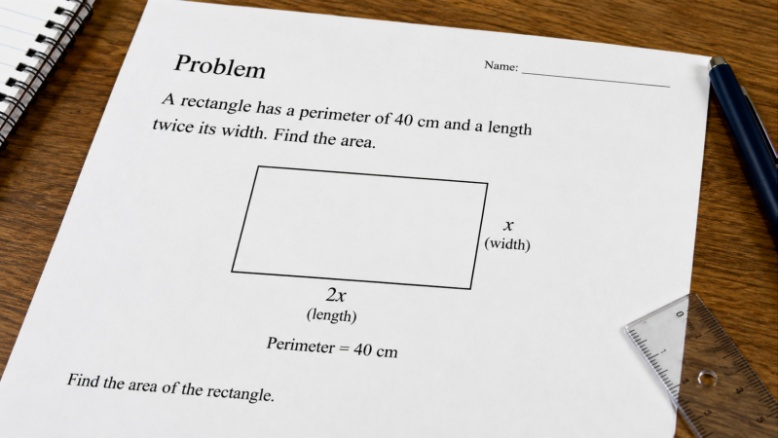
For example:
Problem: "A rectangle has a perimeter of 40 cm and a length twice its width. Find the area."
Before solving, organize the information:
Given information:
-
The perimeter is 40 cm.
-
The length is twice the width.
Goal: Find the area of the rectangle.
Once you know what information you have and what you need to find, you can choose the right formula or strategy instead of guessing where to start.
Rewrite the Problem in Your Own Words
Sometimes the biggest obstacle is not the mathematics itself, but the way the problem is written.
Try explaining the problem using simpler language.
For example:
Original:
"A sequence is defined recursively where each term depends on previous values..."
Rewrite:
"This problem gives me a starting number and a rule for creating the next numbers. I need to find a later term."
When you rewrite a problem:
-
complicated language becomes clearer
-
important relationships become easier to see
-
unnecessary details become less distracting
Many experienced problem solvers use this technique because if you cannot explain a problem clearly, you probably do not understand it completely.
Solve Simpler Versions First
One of the most powerful methods for solving difficult math problems is to start with an easier version.
Instead of attacking the hardest version immediately, ask:
-
What happens if the numbers are smaller?
-
Can I solve a simpler example?
-
Can I test a special case?
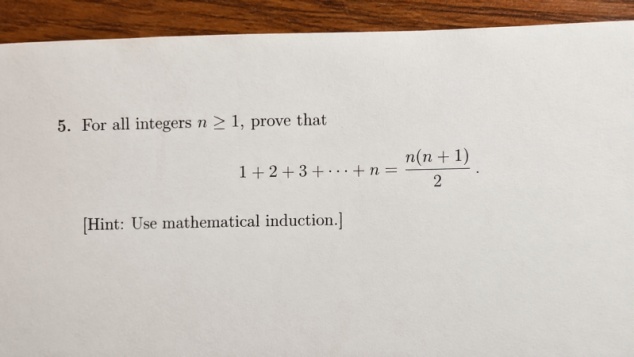
For example, if a problem asks you to prove something for all numbers:
Try checking:
-
n = 1
-
n = 2
-
n = 3
This may reveal a pattern or suggest the correct approach.
Mathematicians often use this strategy because simpler versions can reveal hidden structures in complicated problems.
Look for Patterns and Connections
Many difficult math problems become easier when you identify a hidden pattern.
Look for:
-
repeated numbers
-
symmetry
-
similar shapes
-
relationships between variables
-
repeated operations
For example: 2, 4, 8, 16, ?
Instead of calculating each number individually, recognize the pattern: Each number is multiplied by 2.
Pattern recognition allows you to solve problems faster because you are not treating every question as completely new.
Draw Diagrams or Visualize the Problem
Some math problems are difficult because they are abstract.
A simple drawing can make the relationship clearer.
Visualization is especially useful for:
-
geometry problems
-
probability questions
-
word problems
-
functions and graphs
For example:
A difficult geometry question may become much easier after drawing:
-
the shape
-
known angles
- lengths
-
relationships between points
A diagram helps transform a complicated description into something you can analyze.
Try Different Problem-Solving Strategies
If your first approach does not work, do not assume the problem is impossible. Many difficult math problems require trying more than one method before finding the right solution.
When you get stuck, consider changing your approach:
-
Work backward: Start from the result you want to find and think about what steps could lead you there.
-
Break the problem into smaller parts: A complicated problem often becomes easier when you divide it into smaller tasks and solve them one by one.
-
Find a similar problem: Think about whether you have solved a related question before. Previous examples can help you recognize useful patterns or methods.
-
Change the representation: Try expressing the problem in a different way, such as turning words into equations, using a diagram, or creating a table.
The best problem solvers are not those who always know the answer immediately. They are the ones who can adjust their strategy when the first attempt does not work.
Check and Improve Your Solution
Finding an answer is not always the final step. A strong math solution should also be verified.
Ask:
-
Does my answer make sense?
-
Did I use all important information?
-
Is there another way to solve it?
-
Can my method be simplified?
Checking your solution helps you catch mistakes and improves your understanding.
This final review step is also part of Pólya's classic problem-solving framework, which encourages students to look back at their solution and consider whether it can be improved.
Use AI as a Learning Assistant for Hard Math Problems
When you are stuck on a difficult math problem, AI tools can provide another way to understand the solution process. Instead of simply giving the final answer, a good AI math tool can help explain concepts, show step-by-step calculations, and guide you through different problem-solving methods. Many students now use AI as part of their learning workflow to review examples, understand mistakes, and practice similar questions.
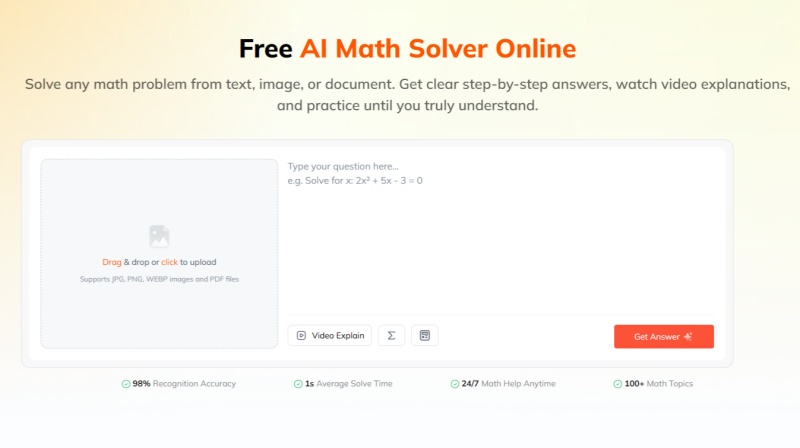
One AI-powered math learning tool you can try is Tenorshare AI Math . Designed for students, it helps users understand difficult math concepts and solve challenging questions through clear explanations and guided solutions.
With Tenorshare AI Math, you can:
-
Get step-by-step solutions instantly: Upload a math problem and receive detailed explanations without needing to write complicated prompts.
-
Understand mathematical concepts more clearly: Instead of only showing calculations, it helps explain the reasoning behind each step.
-
Learn through visual explanations: Tenorshare AI Math supports video generation to help visualize difficult concepts and build a deeper understanding of abstract mathematical ideas.
-
Generate practice questions to test your knowledge: Students can create related exercises to check whether they truly understand the method and apply it independently.
Using AI effectively means asking the right questions, reviewing the solution process, and practicing what you learn. When combined with traditional problem-solving strategies, AI tools can help make difficult math problems easier to understand and solve.
Hard Math Problems That No One Can Solve
Some math problems are difficult not because students have not learned enough formulas, but because mathematicians themselves have not found complete solutions.
These problems show that even the greatest mathematicians sometimes face questions that require entirely new ideas.
Understanding these examples can also change the way students think about difficult problems: struggling with a question is not always a sign of failure. Sometimes it is part of the process of discovering something new.
Some of the world's most famous unsolved problems include:
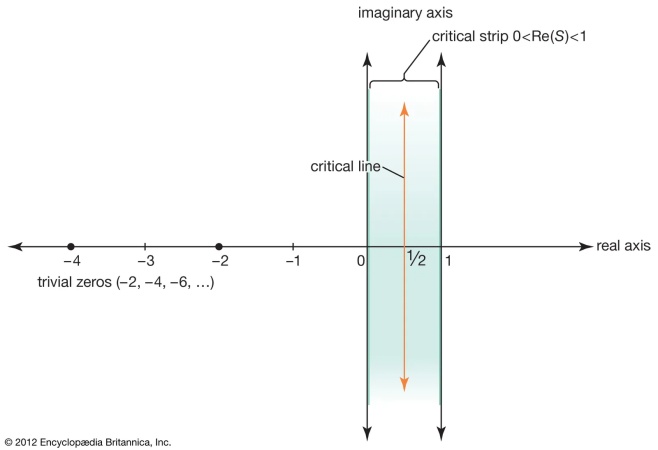
The Riemann Hypothesis
The Riemann Hypothesis is one of the most famous open problems in mathematics. It is connected to the distribution of prime numbers and remains one of the Millennium Prize Problems.
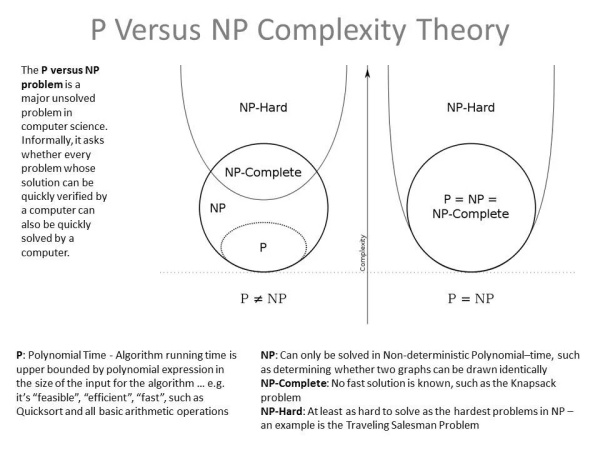
The P vs NP Problem
This problem asks whether every problem whose solution can be quickly verified can also be quickly solved. It has major implications for computer science, cryptography, and algorithms.
The Navier--Stokes Existence and Smoothness Problem
This problem focuses on equations describing fluid motion. Scientists use these equations to model phenomena such as airflow and ocean currents, but proving certain mathematical properties remains unresolved.
These examples demonstrate that some mathematical challenges cannot be solved simply by working harder. They require new concepts, creative thinking, and sometimes decades of research.
Conclusion: How to Solve a Really Hard Math Problem
Learning how to solve a hard math problem is not about finding a quick shortcut or memorizing more formulas. The most important part is developing a reliable way to approach unfamiliar questions and knowing what to do when you feel stuck.
When you feel stuck, start by understanding the problem, organizing the information, looking for patterns, and trying different strategies. Even if your first attempt does not work, each step can help you discover a new way forward.
Difficult math problems become easier when you treat them as a process of exploration rather than a test of whether you are naturally good at math. By practicing problem-solving strategies and using helpful learning tools when needed, you can gradually build the confidence and skills needed to solve more challenging questions.

Tenorshare AI Math
- Solve math from text, images & PDFs at 98% accuracy
- Deliver step-by-step answers with detailed logic breakdown
- Access video explanations for deeper math concept understanding
- Generate matching practice tests to solidify knowledge

FAQs
-
How to Solve Hard Math Problems Easily?
Solving hard math problems becomes easier when you have a clear process. Instead of trying to find the answer immediately, start by understanding the problem, identifying useful information, and breaking it into smaller steps. With enough practice, you can improve your ability to recognize patterns and choose the right strategy for unfamiliar questions.
-
How to Solve Hard SAT Math Problems?
To solve hard SAT math problems, focus on understanding what the question is testing before starting calculations. Many difficult SAT questions require applying familiar concepts in new ways. Reading carefully, simplifying the problem, and trying different approaches can help you find the solution more efficiently.
-
What Should I Do If I Am Stuck on a Hard Math Problem?
If you are stuck on a hard math problem, do not immediately search for the answer. Try rewriting the question, solving a simpler version, or looking at the problem from another perspective. Often, finding the next possible step is more important than solving the entire problem at once.
-
Can AI Solve Hard Math Problems?
AI can help solve many difficult math problems by explaining steps, identifying mistakes, and suggesting different solution methods. However, the best way to use AI is as a learning assistant rather than relying only on the final answer. Understanding the reasoning behind each step is still essential for improving math skills.
-
What Skills Do You Need to Solve Difficult Math Problems?
Solving difficult math problems requires more than knowing formulas. Skills such as logical thinking, pattern recognition, persistence, and the ability to try different approaches are important for handling unfamiliar questions. These abilities can be improved through continuous practice and learning from mistakes.
You Might Also Like
- How to Be Good at Math: A Complete Guide to Improve Your Math Skills
- How to Solve Math Word Problems Step by Step: Strategies, Tips & Tool
- What Happened to Microsoft Math Solver? Why It Was Discontinued and What to Use Instead
- How to Get Better at Math Fast: 8 Strategies to Improve Your Skills
- How to Take Math Notes: The Ultimate Guide to Handwritten and Digital Notes
- How to Use Desmos for SAT 2026: Master the Digital SAT Calculator

Tenorshare AI Math: Solve any math problems with AI
Turn math questions into clear solutions, tutorial videos & targeted practice setsTenorshare AI Math: Instant Solutions
Steps, videos & practice for every problem
Tenorshare AI Math: Solve any math problems with AI